
A reading needs a scale
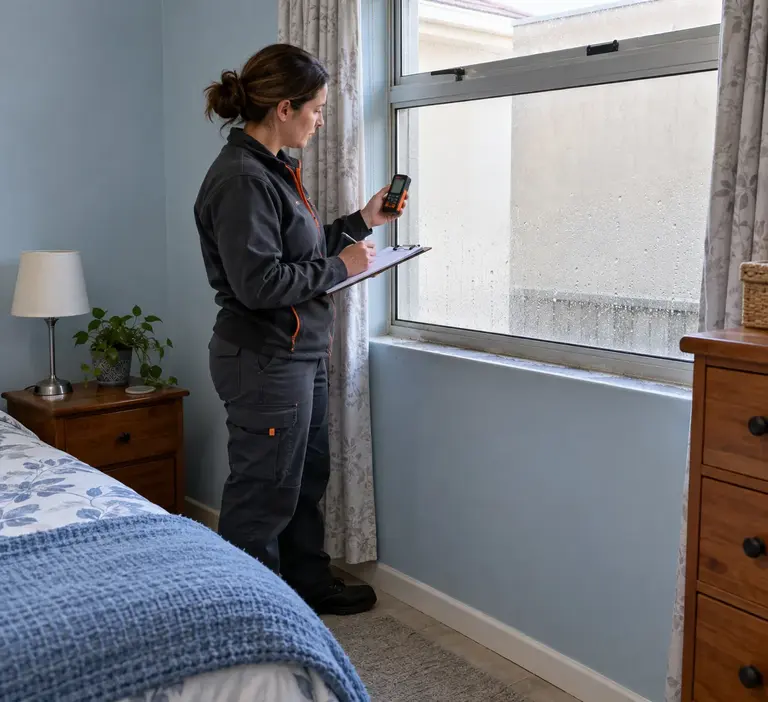
A moisture meter helps map how readings vary across a building. To make sense of the results, record the instrument, operating mode and material being tested. Timber moisture content, comparative masonry readings and wider site observations each provide different information for the assessment.
Some meters measure timber moisture content and report wood-moisture-equivalent values when used on other building materials. Other modes use relative or comparative scales. The manual for the exact device should explain the distinction. A displayed percentage does not automatically mean that the tested wall contains that percentage of water by weight.
Understand what can affect the result
Electrical measurements can be influenced by material characteristics and substances within or behind the surface. Salts and nearby metal can affect certain readings; contact, measurement depth and the instrument's limitations also matter. Different finishes or materials should not be treated as identical comparison points simply because they are on the same wall.
That does not make every high reading irrelevant. It means the reading should be interpreted with observations and a reasoned explanation. Repeated measurements at recorded points can help reveal a pattern, provided the method is suitable and conditions are documented. A colour indicator alone cannot establish where the moisture came from.
Connect readings to an investigation
A sensible assessment records the device and mode, the tested locations, the substrate and relevant environmental conditions. Findings should be considered alongside rain history, plumbing, ventilation, external ground levels and visible defects. Where a question remains unresolved, additional investigation may be needed rather than a more confident label on the original reading.
Air humidity and surface temperature answer different questions from a wall meter. Specialist material or salt testing can also have a role when justified. The choice should follow the problem and the building, including restrictions on invasive work, rather than an assumption that one instrument can settle every damp enquiry.
What a homeowner should ask
Ask what scale was used, what the readings show, what they do not establish, and how they support the proposed repair. A helpful report explains uncertainty and next steps. A single reading should not be presented as proof of rising damp, a completely dry wall or guaranteed future performance.